Loading...
Serving Lowell, MA and surrounding areas. (351) 204-0101
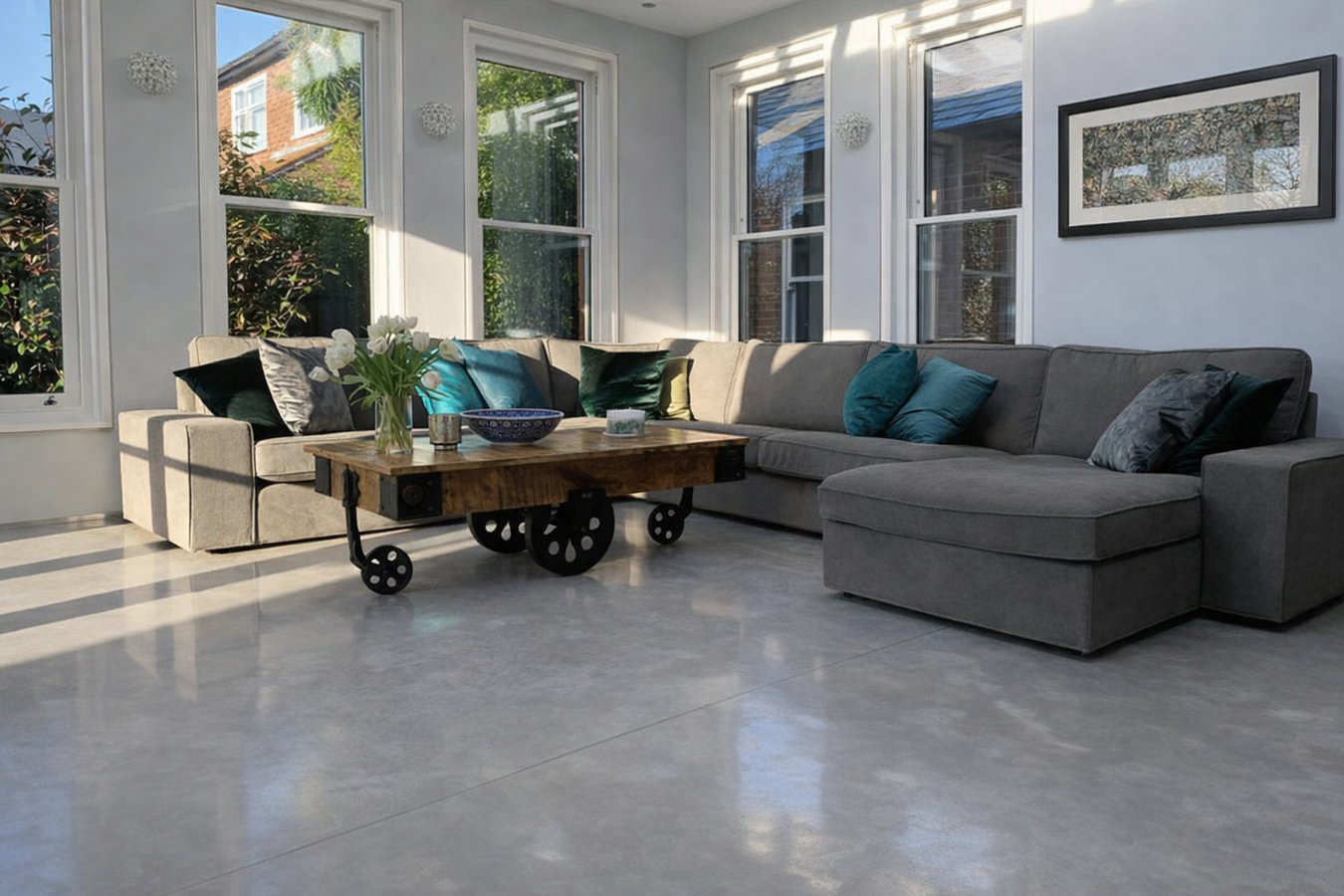
A crumbling basement or pitted garage floor is more than an eyesore. We replace failing concrete slabs in Lowell with properly prepared, city-permitted pours that handle moisture and hold up through New England winters.
Concrete floor installation in Lowell means removing the existing slab or surface, preparing the ground underneath with a compacted gravel base, and pouring fresh concrete that cures into a solid, level floor. Most residential basement and garage projects in Lowell take one to two active workdays, and the floor is walkable within 48 hours of the pour.
In Lowell's older housing stock, many original basement slabs were poured thin, without a moisture barrier, and without the gravel base that keeps a floor level over time. A new floor is not just about the surface, it is about correcting those foundational issues so the problem does not repeat. Homeowners who are also updating their outdoor concrete often combine a new basement or garage floor with work like garage floor concrete finishing to get a uniform, sealed surface throughout the space.
If you can scrape pieces of your basement floor up with your foot or notice a fine gray powder collecting along the edges, the original slab has deteriorated past the point of patching. This is common in Lowell homes built before World War II, where thin, low-quality original pours have simply reached the end of their life. A new slab is the only real fix, as surface coatings will not bond to concrete that is breaking down underneath.
Small hairline cracks in a concrete floor are common and usually harmless. But if you notice a crack where one side sits higher than the other, or a crack that has visibly grown since you first noticed it, the slab is moving. In Lowell's climate, this kind of movement tends to get worse each winter as frost heave and soil shifting continue to work on the slab from below.
If your basement or garage floor holds standing water after a heavy rain or when snow melts off the driveway, the floor may be sloped incorrectly or have low spots that have settled over time. This is a water damage risk and a sign that the slab was either poured unevenly or has shifted. A new floor can be poured with a proper slope toward a drain so water moves where you want it to.
Pitting and spalling, where the top layer of concrete flakes off in chunks, is a sign the slab has been damaged by repeated freeze-thaw cycles or road salt. In Lowell garages, road salt tracked in from winter driving accelerates this damage significantly. Once spalling covers more than a quarter of the floor or pitting is deep enough to catch a coin, patching is a short-term fix at best.
We install concrete floors in basements and garages throughout Lowell and the surrounding area. Every project begins with clearing and demolishing the existing surface, then assessing what is underneath. In older Lowell homes, the subgrade often needs to be built up with compacted gravel before a new slab can go in. We address that step properly rather than pouring over a problem. A polyethylene vapor barrier is placed under every basement slab to block moisture from migrating up through the floor.
Standard residential slabs are poured four inches thick. Garages that will carry vehicles can be poured thicker if needed. We cut control joints into every slab, which guides any future cracking into straight, predictable lines rather than jagged random cracks across the middle of the floor. For garage floors, a broom finish provides grip when the surface is wet. For basements that will become finished living space, a smoother finish compatible with flooring installation is available. The American Concrete Institute sets the standards for proper slab thickness, control joint spacing, and curing practices that we follow on every pour.
If your project also involves outdoor concrete, we can coordinate a basement or garage floor installation alongside concrete pool decks or other exterior work to reduce mobilization costs and keep the project on a single timeline.
Best for Lowell homeowners with original pre-war slabs that have deteriorated beyond patching and need a full, properly prepared replacement.
Suited for garages where road salt damage, spalling, or settled sections have made the existing floor unsafe or impossible to keep clean.
For homeowners planning to add flooring, a gym, or living space on top, with a smooth pour and full cure period built into the project schedule.
Lowell goes through a serious number of freeze-thaw cycles each winter. The ground repeatedly expands and contracts between November and March, and a concrete floor that was not poured with cold-weather resilience in mind will show the effects within a few seasons. Timing matters too: concrete poured in late fall or early spring needs extra protection to cure properly, and a contractor who does not account for low temperatures can leave you with a floor that fails before its first winter is out.
Most of Lowell's housing stock was built before 1940 during the city's mill era, and many homes in the Acre, Centralville, and Belvidere neighborhoods have basement slabs that were poured thin, without proper gravel underneath, and without a vapor barrier. Parts of Lowell also sit on filled land near the Merrimack and Concord Rivers, where soil conditions can be softer and less stable than in surrounding towns. We assess what is below the surface before quoting so the price reflects reality, not just the cost of the pour itself.
We work on homes across Lowell and serve customers in nearby communities including Chelmsford, Tewksbury, and Billerica. If you are not sure whether your property falls within our service area, call us directly to confirm.
We respond within 1 business day to schedule a free on-site estimate. We will ask about the space size, existing floor condition, and what you plan to use the room for, since that affects thickness and finish.
Your quote covers demolition, debris removal, subgrade prep, the vapor barrier, the pour, finish, control joints, and permit fees. We do not start until every item is approved in writing.
We apply for the building permit through Lowell's Inspectional Services Department before any work begins. Once approved, we remove the old slab, haul the debris, and compact a proper gravel base, addressing any soft spots found during excavation.
We pour the slab, finish the surface, and cut control joints in a single session. The city inspector reviews the work before we leave the site. We then walk you through care instructions for the cure period before your space is returned to use.
We respond within 1 business day, visit your space in person before quoting, and put every cost in writing before work begins.
(351) 204-0101We install a polyethylene vapor barrier under every basement slab before the pour. Lowell's older homes are especially prone to ground moisture migrating up through a floor, and a barrier is the step that keeps your new slab and whatever you put on top of it from developing moisture problems within a few years.
We have worked on homes across every Lowell neighborhood since 2022 and know that pre-war properties often require subgrade work that drives up cost. Our estimates account for what we actually find once the old slab comes out, not just what the square footage suggests on paper.
We file with Lowell's Inspectional Services Department and schedule the inspection so your project is documented and on record. That matters when you sell your home or pull another permit down the road. The City of Lowell Inspectional Services Department actively enforces permit requirements for residential slab work.
Road salt is the main thing that destroys Lowell garage floors over time. We finish and seal garage slabs to resist that kind of chemical wear from the start, so you are not watching the surface pit and flake after the first few winter seasons.
Every concrete floor we install in Lowell starts with honest subgrade assessment, includes a moisture barrier where it belongs, and gets inspected before we leave. A floor built that way gives you a real starting point, whether you plan to finish the basement, use it for storage, or simply want a surface that does not crumble underfoot.
Pair your new basement or garage floor with a durable concrete pool deck for a complete outdoor and indoor hardscape upgrade.
Learn moreUpgrade your garage floor with a properly mixed, sealed pour designed to resist road salt and New England freeze-thaw cycles.
Learn moreOur crews are booking now for the spring and summer season. Contact us today to get your project on the schedule before availability fills.