Loading...
Serving Lowell, MA and surrounding areas. (351) 204-0101
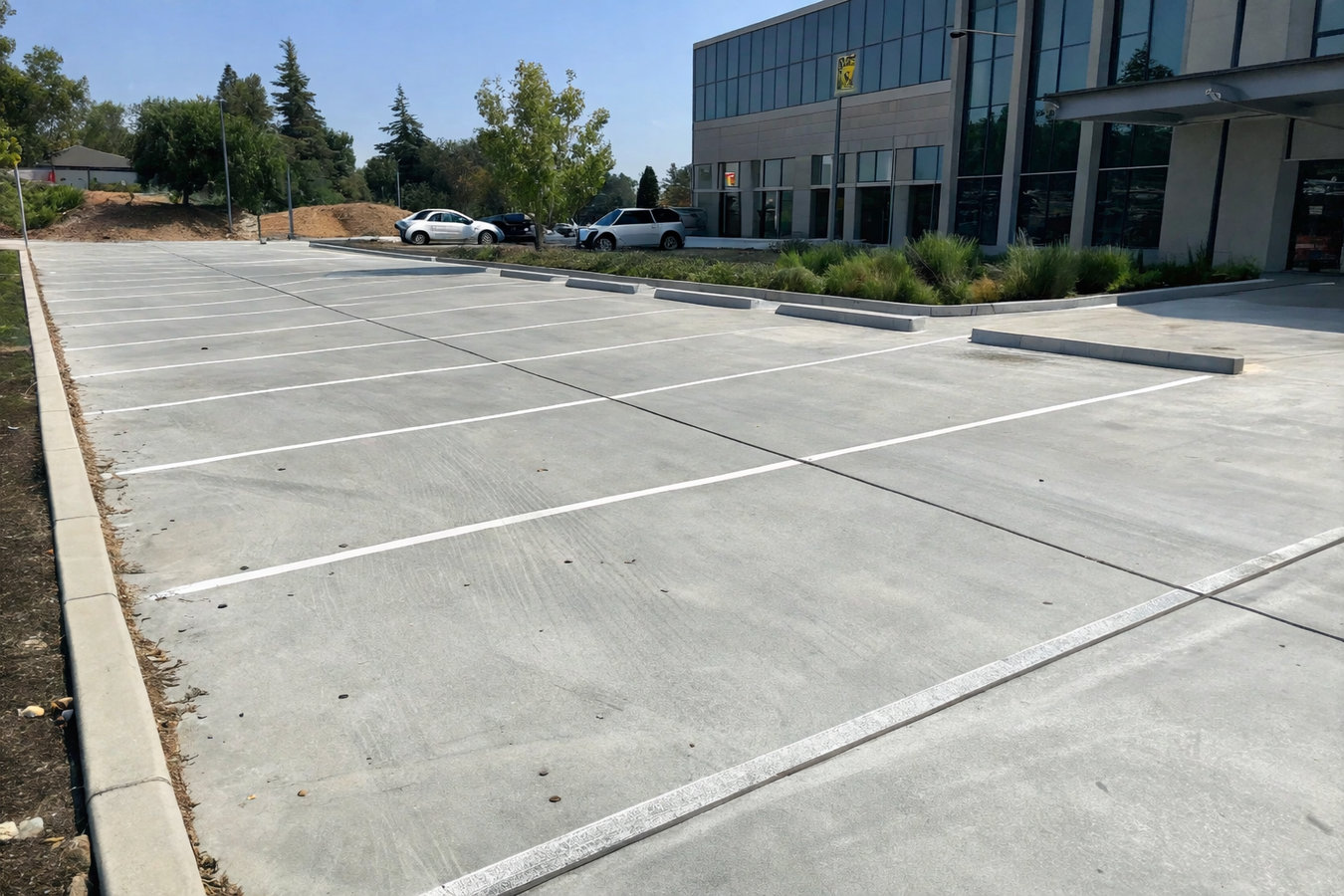
An unpaved or failing parking lot costs you more every year. We build concrete lots in Lowell with proper base prep, drainage grading, and city permits so your surface holds up through hard winters and stays out of your maintenance budget.
Concrete parking lot building in Lowell means excavating the existing surface, grading and compacting a crushed-stone base, pouring a reinforced concrete slab, cutting control joints, and sealing the finished surface. Most small-to-mid-size lots take three to five active workdays, with a curing period of at least seven days before vehicles can use the surface.
In Lowell, getting the base right matters as much as the pour itself. The city averages more than 100 freeze-thaw cycles per year, and a lot built without proper drainage grading and a compacted stone base will start cracking within a few seasons. Property owners dealing with related paving work often combine a new parking lot with concrete driveway building to keep the project on one timeline and reduce mobilization costs.
Lowell's older industrial and mixed-use neighborhoods add another layer of complexity: many properties have subsurface fill, old foundations, or buried utilities that can affect excavation. We assess those conditions during the site visit, not after the digging starts.
If you walk your parking area in April and see sections that have lifted, cracked, or broken into chunks, that is freeze-thaw damage at work. Lowell's winters are hard on any paved surface, but once cracking becomes widespread rather than an isolated hairline, patching is usually a short-term fix at best. A full replacement gives you a fresh start with a properly prepared base built for the cold.
Standing water on a parking lot is a sign the surface is no longer draining correctly, either because it has settled unevenly or was never graded properly to begin with. In Lowell's climate, that standing water freezes in winter and makes the damage worse every year. If puddles are still there hours after rain stops, have a contractor assess whether the surface can be corrected or needs full replacement.
Many older Lowell properties still have unpaved parking areas that turn to mud in spring and create dust in summer. If you are dealing with runoff onto neighboring properties, complaints from tenants, or vehicles getting stuck, a concrete lot solves all of those problems at once and adds long-term value to the property.
Surface scaling, where the top layer of concrete flakes off in thin sheets, is common on older lots in the Northeast that were exposed to road salt and harsh winters without proper sealing. Once scaling starts, it tends to spread. If large areas of your lot look rough and pitted rather than smooth, the surface has been compromised and will continue to deteriorate without intervention.
Every parking lot project starts with the ground, not the concrete. We remove the existing surface material, excavate to the correct depth, bring in compacted gravel for the base layer, and grade the entire pad so water drains away from buildings and toward designated drainage points. The Federal Highway Administration is clear that subgrade preparation is what separates lots that last decades from ones that crack within a few seasons, and we treat it accordingly.
For standard passenger-vehicle lots, slabs are poured four to six inches thick. Properties that will see delivery trucks, dumpsters, or heavy equipment get a thicker pour designed for that load. Control joints are cut into every slab at regular intervals so the concrete has a place to move with temperature changes without cracking randomly across the surface. A penetrating sealer is applied after the lot cures to protect against the road salt Lowell applies heavily from November through March.
For properties that also need site access improvements, we can coordinate parking lot work alongside concrete footings for new structures or concrete driveway building to unify the entire paved area in a single project.
Best for properties with unpaved areas, gravel lots, or dirt parking that need a permanent, low-maintenance paved surface.
Suited for existing concrete lots where cracking, heaving, or drainage failure is widespread enough that patching no longer makes economic sense.
For property owners adding parking spaces to meet tenant requirements, zoning requirements, or a change in property use.
Lowell averages more than 100 freeze-thaw cycles per year. Temperatures cross the freezing point and back again repeatedly from November through March, and every cycle stresses any paved surface that was not built with drainage and base depth in mind. The city also applies road salt and chemical de-icers aggressively throughout winter, which compounds wear on concrete surfaces that were not sealed properly after installation. Building a lot here is not the same job as building one in a warmer climate.
Much of Lowell was developed in the 19th and early 20th centuries, and many properties, particularly in the Acre, Centralville, and Belvidere neighborhoods, have complicated subsurface conditions: layers of fill, old foundations, or buried materials that are not always documented. The City of Lowell Inspectional Services Division also requires building permits for new paved surfaces, and the Department of Public Works is involved when impervious area is added to a property. We handle both.
We build parking lots throughout Lowell and serve customers in nearby communities including Dracut, Lawrence, and Methuen. Call us directly if you want to confirm your property falls within our service area.
We schedule a time to walk your property, measure the area, assess the existing surface and drainage, and ask how the lot will be used. You get a written estimate that covers materials, labor, site prep, permits, and sealing, with no items left for the final invoice.
We apply for the required City of Lowell building permit before any work begins. Permit review typically takes one to two weeks. We coordinate any required stormwater review and keep you updated on approval status.
The crew removes the existing surface, excavates to the correct depth, and brings in and compacts a gravel base layer. This phase takes one to two days and involves heavy equipment. All vehicles must be cleared from the work zone before this phase begins.
Concrete is delivered, spread, leveled, and finished in a single day. Control joints are cut the same day or the following morning. The lot is barricaded immediately and stays off-limits to vehicles for at least seven days while the surface reaches working strength.
We visit the site before quoting. No phone estimates, no surprise costs at the end.
(351) 204-0101Lowell's winters are not forgiving. We size the base, grade for drainage, and cut control joints to code on every lot because a surface that looks fine in May can fail by March if those steps were skipped. Our lots are built for the climate, not just the calendar.
We apply for the required City of Lowell building permits and coordinate any stormwater review the project requires. You do not have to navigate the Inspectional Services Division or the Department of Public Works. Your property records stay clean, and your project is done by the book.
Older Lowell properties often have fill, old foundations, or buried materials underground that are not visible from the surface. We assess subsurface conditions at the site visit and factor any needed remediation into the written estimate, so the number we agree on is the number you pay.
We have built and replaced parking lots on commercial buildings, multi-family properties, and institutional sites throughout the greater Lowell area. Ask us for references from projects completed in the same climate and soil conditions you are dealing with. The American Concrete Pavement Association sets the standards we follow on every lot, and we are happy to explain what that means for your project.
Every one of these points comes back to the same thing: a parking lot that works correctly years from now, not just on the day of the pour. We pull permits, prepare the base, grade for drainage, and seal the finished surface because those steps are what separate a lot that lasts from one that needs replacing again in five years.
Structural footings poured to Massachusetts frost-depth code for decks, additions, and new construction on Lowell properties.
Learn moreResidential concrete driveways installed with the same base prep and drainage grading that keeps commercial lots in good shape through New England winters.
Learn moreContractor schedules in Lowell book fast once spring arrives. Call or submit your project details now and we will get a site visit on the calendar.