Loading...
Serving Lowell, MA and surrounding areas. (351) 204-0101
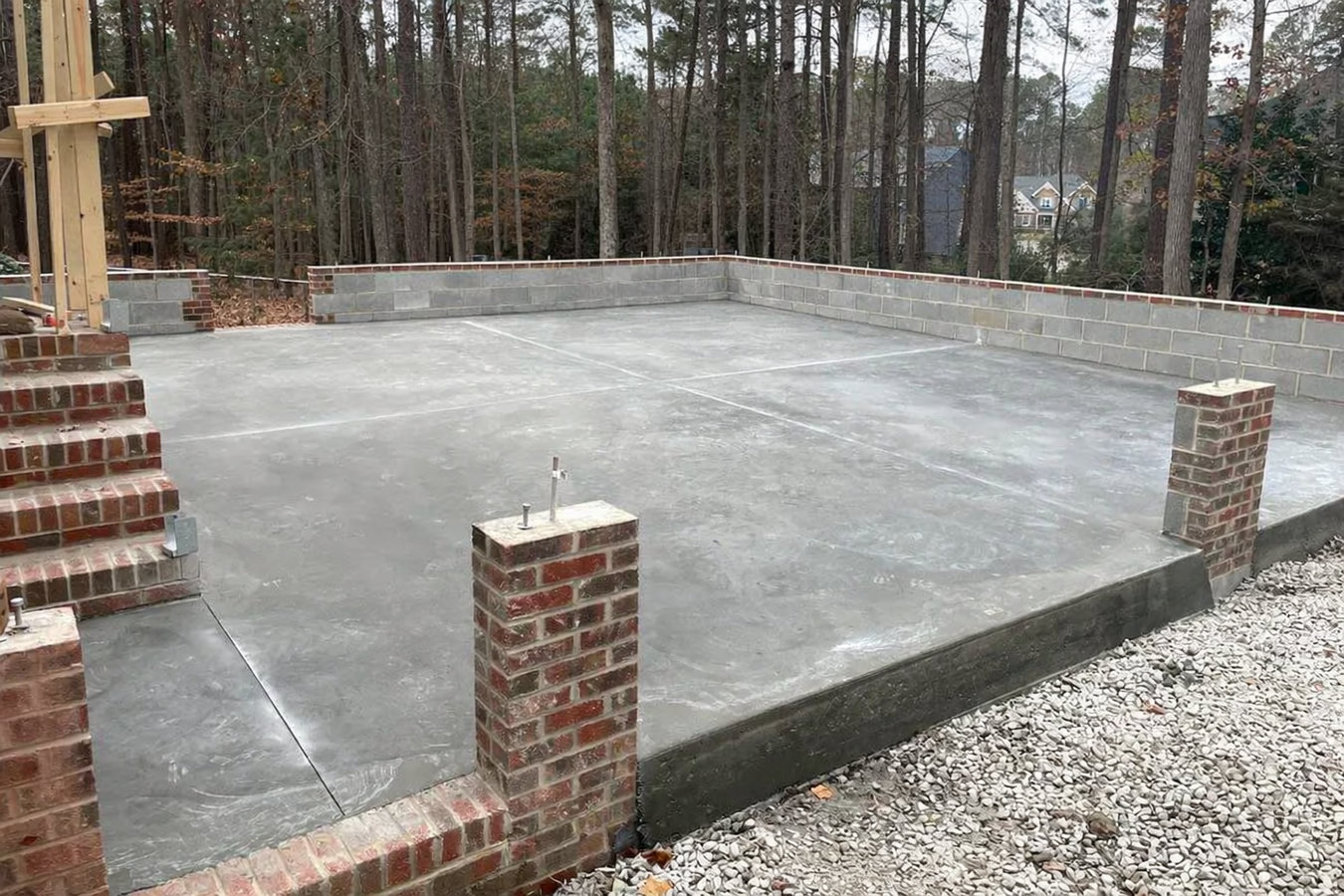
A slab that shifts or cracks in year three is a sign the base work was rushed. We pour concrete slabs in Lowell with proper drainage, steel reinforcement, and footings that handle freeze-thaw winters, not just the first one.
Slab foundation building in Lowell involves excavating to grade, compacting a gravel drainage base, placing steel reinforcement, and pouring concrete in a single continuous session. Most residential slabs take five to seven days from site prep through the time you can walk on them, with the concrete continuing to gain strength over the following 28 days.
Homeowners in Lowell most often need a new slab for a garage addition, sunroom, accessory structure, or to replace an original slab in a mid-20th century home that has cracked and settled past the point of patching. The city requires a building permit before work begins, and a licensed contractor handles that process. If your project involves underground structural support beyond just the slab, pairing this work with concrete footings ensures the whole base is built to a consistent standard.
Hairline cracks are common and often cosmetic, but cracks wider than a quarter-inch, diagonal cracks running across a corner, or sections of floor that sit at noticeably different levels are structural warning signs. In Lowell's older homes, this pattern typically means the original slab was poured without a proper gravel base or edge insulation and has shifted over decades of hard winters.
If water consistently collects on your slab surface or along its edges rather than draining away, the slab may be settling unevenly or the drainage layer beneath it has failed. Lowell's spring snowmelt and nor'easter storms can saturate the ground quickly, and standing water accelerates both cracking and soil erosion under the slab.
When a slab shifts, the structure sitting on top of it shifts too. Doors that suddenly stick or won't latch, gaps appearing between walls and the floor, or visible cracks running up from floor level into walls are all signs the slab beneath is moving. This is especially common in Lowell homes built in the 1940s through 1960s where original slabs are now at the end of their useful life.
If you are adding a garage, sunroom, or accessory building to your Lowell property, you need a proper concrete slab before framing can begin. A gravel pad or wood base is not a substitute: it will not hold up through New England winters and will not pass a city building inspection. This is the most straightforward sign that slab foundation work is ahead.
Every slab we pour starts with the groundwork that makes it last. We excavate and level the area, compact a crushed stone base for drainage, set up edge forms, and place steel rebar or welded wire mesh before a single yard of concrete is ordered. In Lowell's climate, we also install rigid foam insulation at the slab edges when site conditions call for it, which keeps the ground from freezing and expanding directly against the concrete each winter.
The pour itself happens in a single continuous session. We work the surface quickly, screeding and finishing to the required grade before the concrete begins to set. After the pour, we protect the surface during the critical early curing window, because concrete that dries too fast in hot or windy weather is weaker than it should be. For projects that also require structural support under columns, posts, or walls, we combine the slab work with concrete footings in a coordinated pour.
When a new slab is part of a broader foundation upgrade, we can also connect that work to foundation installation services for homeowners who need full below-grade work done at the same time, rather than managing two separate contractors.
Suited for homeowners adding a garage, sunroom, or accessory structure that needs a code-compliant concrete base before framing begins.
Best for Lowell homes where an original mid-century slab has cracked, settled, or failed to drain and needs full removal and replacement.
Ideal for projects where posts, columns, or bearing walls require deeper footings poured as part of the same concrete work.
Lowell averages more than 100 freeze-thaw cycles per year. Each time the ground freezes, it expands slightly; when it thaws, it contracts. A slab poured without adequate edge insulation, a well-drained base, or steel reinforcement will start showing the effects of that movement within a few seasons. The Portland Cement Association recommends specific base preparation and curing protocols for cold-climate slab work, and we follow those standards on every Lowell project.
A significant share of Lowell's residential housing was built before 1940. Many of those homes have original concrete work that was poured directly on soil with no gravel base and no reinforcement. Replacing those slabs is different from a new pour on a clean lot: old concrete must be demolished, removed, and the underlying soil assessed before anything new goes down. Parts of Lowell near the Merrimack River also sit on softer fill soils that require extra compaction or a thicker gravel base, which affects both the timeline and the final cost.
We serve homeowners throughout Lowell and the surrounding region. If you are in Chelmsford, Billerica, or Tewksbury, give us a call to confirm your area is on our current schedule before the spring booking window closes.
We respond within 1 business day to schedule a free on-site visit. We need to see the area, check soil conditions, and confirm access for concrete trucks before any price is discussed.
Your written quote covers excavation, gravel base, forming, steel, the pour, and permit fees. We file the building permit with Lowell's Inspectional Services Department. Approval typically takes a few days to two weeks depending on the time of year.
Before excavation begins, we arrange for Dig Safe (Massachusetts 811) to mark underground utilities. Site prep, including grading, gravel compaction, and form setting, typically runs one to two days.
Concrete arrives by truck and the crew pours, screeds, and finishes the surface in a single session. The slab needs 24 to 48 hours before foot traffic and at least one month before vehicle use. A city inspector checks the work before or after the pour per permit requirements.
Free estimate, written quote, no obligation. We handle the permit process with the City of Lowell so you don't have to.
(351) 204-0101We excavate, compact a gravel drainage layer, and install edge insulation on every Lowell slab project. These steps are sometimes skipped to cut cost and schedule, but they are what prevent cracking and heaving in a climate with Lowell's freeze-thaw cycle count.
We apply for the building permit through Lowell's Inspectional Services Department and confirm approval before the crew arrives. That keeps your project legal and protects you when you go to sell or refinance. We have handled this process for residential projects across Lowell's neighborhoods.
We have worked in Lowell's residential neighborhoods from the Acre to Belvidere, pouring slabs on properties with tight lots, older soil conditions, and the constraints that come with Lowell's urban street grid. That direct experience shapes how we scope and quote each job.
You can verify our Home Improvement Contractor registration through the{' '} Massachusetts Office of Consumer Affairs and Business Regulation. That registration means the state has oversight of our work and you have recourse through the state if something goes wrong.
These are the things that matter on a slab project in Lowell: the base under the concrete, the permit documentation, and a contractor who has worked on properties like yours in this city. Call us to schedule your site visit and get a written estimate before the spring season books up.
Full below-grade foundation work for Lowell homes requiring a basement, crawl space, or full replacement of an original foundation.
Learn moreIsolated footings for posts, columns, and load-bearing points, dug below Lowell's frost line and poured to code.
Learn moreConcrete contractors in the Lowell area book up quickly once the ground thaws. Call or submit today to lock in your start date and get a written estimate.