Loading...
Serving Lowell, MA and surrounding areas. (351) 204-0101
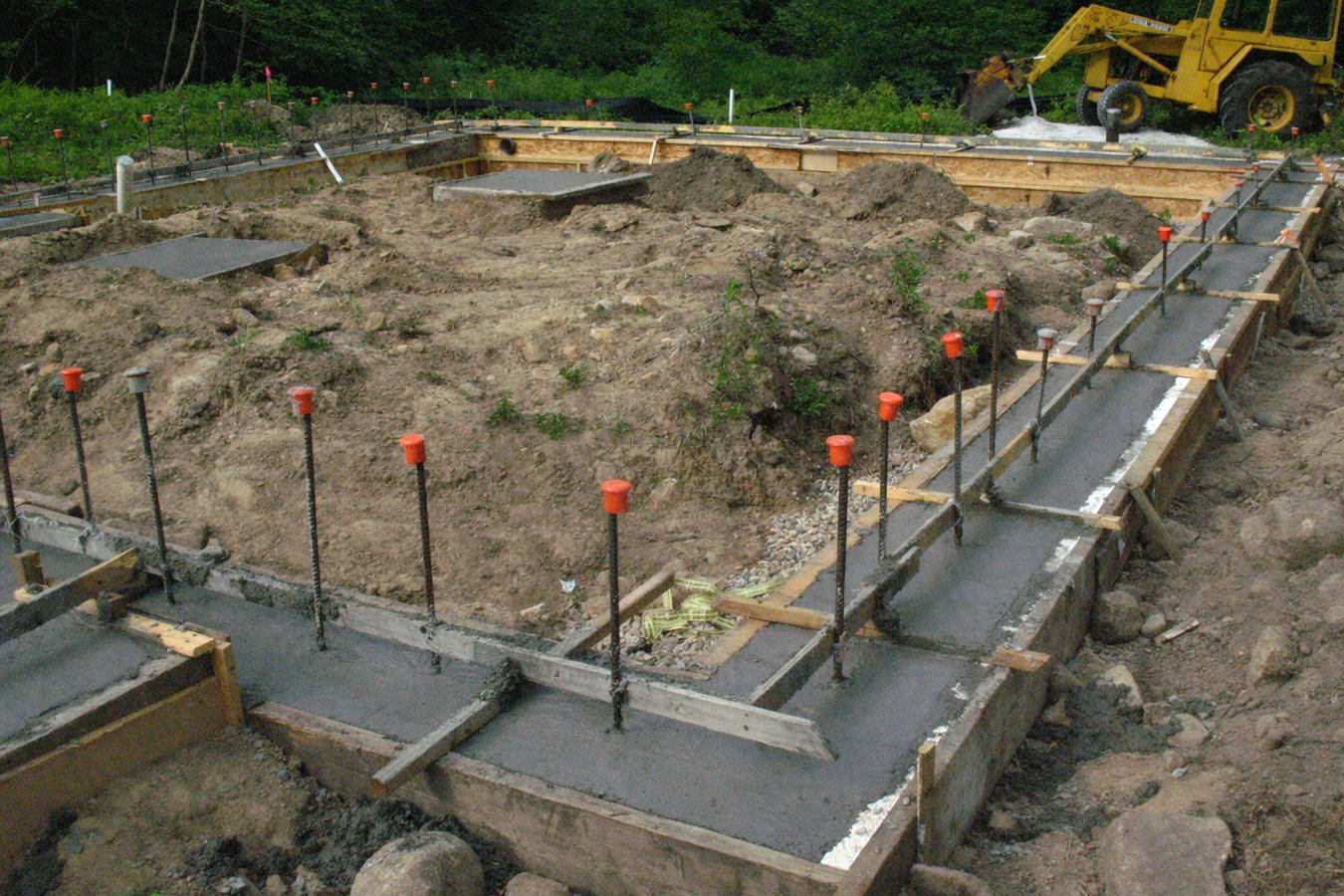
A footing poured too shallow will move when the ground freezes. We install concrete footings in Lowell to the required 48-inch frost depth, with permits pulled and inspections passed, so whatever you build on top stays exactly where you put it.
Concrete footings in Lowell are poured at least 48 inches below grade to sit below the frost line, shaped in forms to the required dimensions, reinforced with steel where needed, and inspected by a city building inspector before they are covered up. A typical small residential footing project takes one to three active workdays, with permit approval adding one to two weeks before work can begin.
In Lowell, the frost depth requirement is not optional. The ground freezes deep here each winter, and a footing that was poured too shallow will be pushed upward by frost heave, cracking or tilting whatever sits above it. The permit and inspection process exists precisely to catch this: an inspector verifies depth and dimensions before the footing is buried and invisible. For property owners planning a full structural project, footing work is often the first step before foundation installation or a larger addition.
Lowell's dense urban lots and older housing stock add real complexity. Many homes were built over a century ago, tight side yards limit equipment access, and soil conditions near the Merrimack River corridor can include fill or soft alluvial material. We assess all of that before quoting so the price reflects the actual job.
If you can see a gap opening between your porch and the house, or if your deck surface slopes noticeably in one direction, the footings underneath may have shifted or settled. In Lowell, this is especially common after a hard winter: frost can push shallow or undersized footings upward, and they do not always settle back to where they started. A tilting structure is not a cosmetic issue; it can become unsafe.
Diagonal cracks running from window or door corners, or stair-step cracks in brick or block foundation walls, often point to uneven settling that can trace back to a footing that has moved or deteriorated. Lowell's older homes, many built before modern footing standards existed, are particularly prone to this over time. New or growing cracks are worth having a concrete contractor assess.
Any time you add weight to your home, whether a new deck, a sunroom, a garage, or a second story, new footings are almost certainly required. This is not optional: it is what keeps the new structure stable and what your building permit will require. If a contractor proposes attaching a new structure to your existing foundation without adding footings, ask them to explain why that is safe.
If you recently bought a Lowell home and the inspection report mentioned settlement, footing issues, or deferred structural maintenance, do not wait for the problem to get worse. These items are often flagged as monitor items, but in a climate with hard winters and older housing stock, monitoring without acting can mean a small repair becomes a large one.
We install footings for decks, porches, additions, garages, and foundation walls throughout Lowell and surrounding communities. Every project starts with a site assessment: we look at what is being built, where the footings need to go, what the soil looks like, and whether there are any access challenges in the yard or along the structure. In a dense city like Lowell, that last question matters, since large excavation equipment often cannot reach the work area on a tight urban lot, which means hand-digging and adjusted timelines.
The American Concrete Institute sets the standards for concrete placement, curing, and cold-weather protection that we follow on every footing pour. In Lowell, cold-weather precautions are not a corner-case concern: footing work is typically scheduled between late April and October specifically to keep fresh concrete from freezing before it cures. If a shoulder-season pour is necessary, we use appropriate protective measures and do not guess.
For larger structural projects, we can schedule footing installation alongside foundation raising or coordinate footings with foundation installation to keep the project on a single timeline and minimize disruption to the property.
Best for homeowners adding or replacing outdoor structures, where frost-depth compliance and city inspection are required before construction can proceed above ground.
Suited for room additions, attached garages, or accessory structures that need independent load-bearing bases rather than relying on older original foundations.
For new construction or major additions where continuous footing pours are needed to support foundation walls and the structure above them.
Massachusetts sets a 48-inch minimum frost depth for footings, and Lowell's winters make that requirement real. Temperatures drop well below freezing from December through February, and frost can penetrate deep into the ground. A footing that sits above the frost line will be pushed upward when the soil expands, and the damage it causes, to decks, porches, and additions, shows up as tilting, cracking, and gaps that widen every year. The deeper dig costs more, but it is the only way a footing actually works here long-term.
Lowell's housing stock is among the oldest in Massachusetts. The city's mill-era buildings and worker housing from the 1840s through 1920s were not built to current code, and many homes in neighborhoods like the Acre and Centralville have rubble stone or brick foundations that were never designed to support modern additions. We assess existing foundations as part of every site visit and tell you honestly what they can carry. Parts of Lowell near the Merrimack River also have soil that includes fill or soft alluvial material, which can require larger footings to spread loads safely.
We serve Lowell and surrounding communities including Dracut, Chelmsford, and Andover. The Massachusetts State Building Code frost depth requirement applies across all of these communities, and our process is consistent regardless of which side of the town line the project falls on.
We come to your property and look at what is being built, where the footings need to go, and what the soil and site access look like. You get a written estimate that reflects your specific job, not a phone guess.
We apply for the required building permit through Lowell's Inspectional Services Division before any digging starts. Permit review typically takes one to two weeks. We handle the paperwork; you sign as the property owner on record.
We dig down to at least 48 inches, set forms, place any required steel reinforcement, and pour the concrete. The pour itself is typically quick; forms stay in place for 24 to 48 hours while the concrete sets.
The city inspector verifies the footing before we cover it. After the inspection passes, we remove the forms and backfill the area. The footing continues curing for several weeks; we give you a clear date when it is safe to build on.
Footing costs depend on your specific lot, soil, and access. We come out before quoting so the number we give you is the number you pay.
(351) 204-0101Massachusetts code requires this depth, and Lowell building inspectors enforce it. We do not guess at depth or cut the excavation short to save time. Every footing we pour sits below the frost line so the ground can freeze and thaw all winter without moving what is built above it.
We pull the building permit and coordinate the city inspection before any footing is buried. That inspection creates a permanent record that the structural work was done correctly and approved, which protects your property value and removes a common red flag in real estate transactions.
A large share of Lowell's homes were built before 1940 with foundations that were not designed for modern additions. Before we quote, we look at your existing foundation and tell you what it can support independently. This prevents the situation where work begins and unexpected conditions change the scope and the bill.
Many Lowell lots are tight, with narrow side yards and mature trees close to structures. Large excavation equipment often cannot access the work area, and hand-digging is common. Ask us for references from footing projects on properties similar to yours in the greater Lowell area. The City of Lowell Inspectional Services Division permits and inspects every structural footing we install, so there is always an independent check on our work.
The common thread is work that holds up long after we have left the site. Footings are invisible once they are buried, which is exactly why the permit, the inspection, and the depth requirement exist. We follow all three on every project, and the structural work we do in Lowell's older neighborhoods reflects that.
Lifting and stabilizing settled foundations on Lowell's older homes, often coordinated with new footing work to address the root cause of movement.
Learn moreFull foundation pours for new construction and major additions, with footing work included as the first structural step of every project.
Learn moreLowell's footing season runs April through October. Call now or submit your project details and we will schedule a site visit before the calendar fills up.